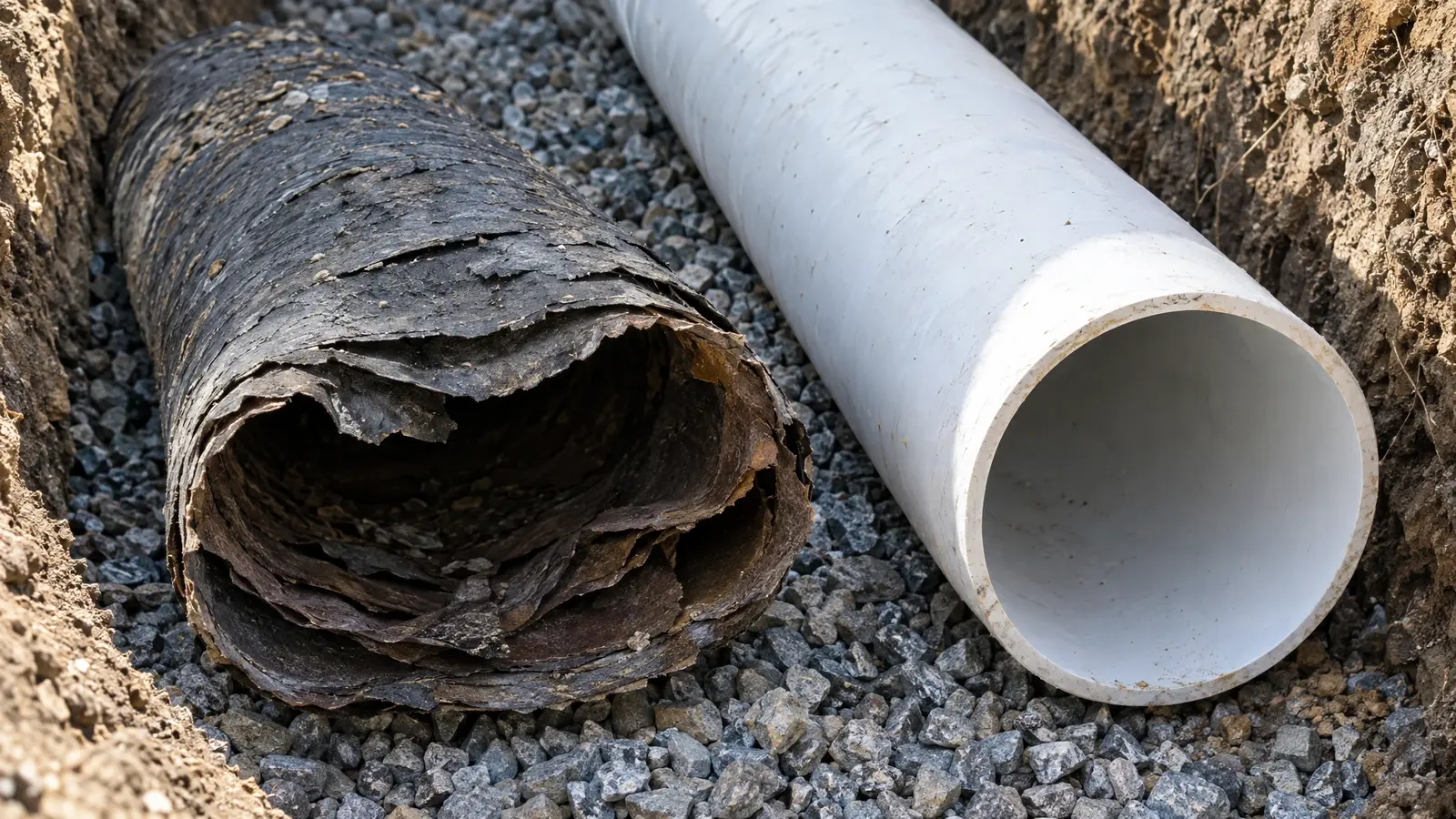
Tar-impregnated fiber pipe used mid-century. It softens, deforms and collapses, and it is rarely worth saving.
Orangeburg, or bituminous fiber pipe, was made from layers of wood pulp and pitch and used for sewer laterals roughly from the 1940s into the early 1970s. It is lightweight and cheap, but over time it absorbs water, softens and deforms into an oval, flakes and collapses.
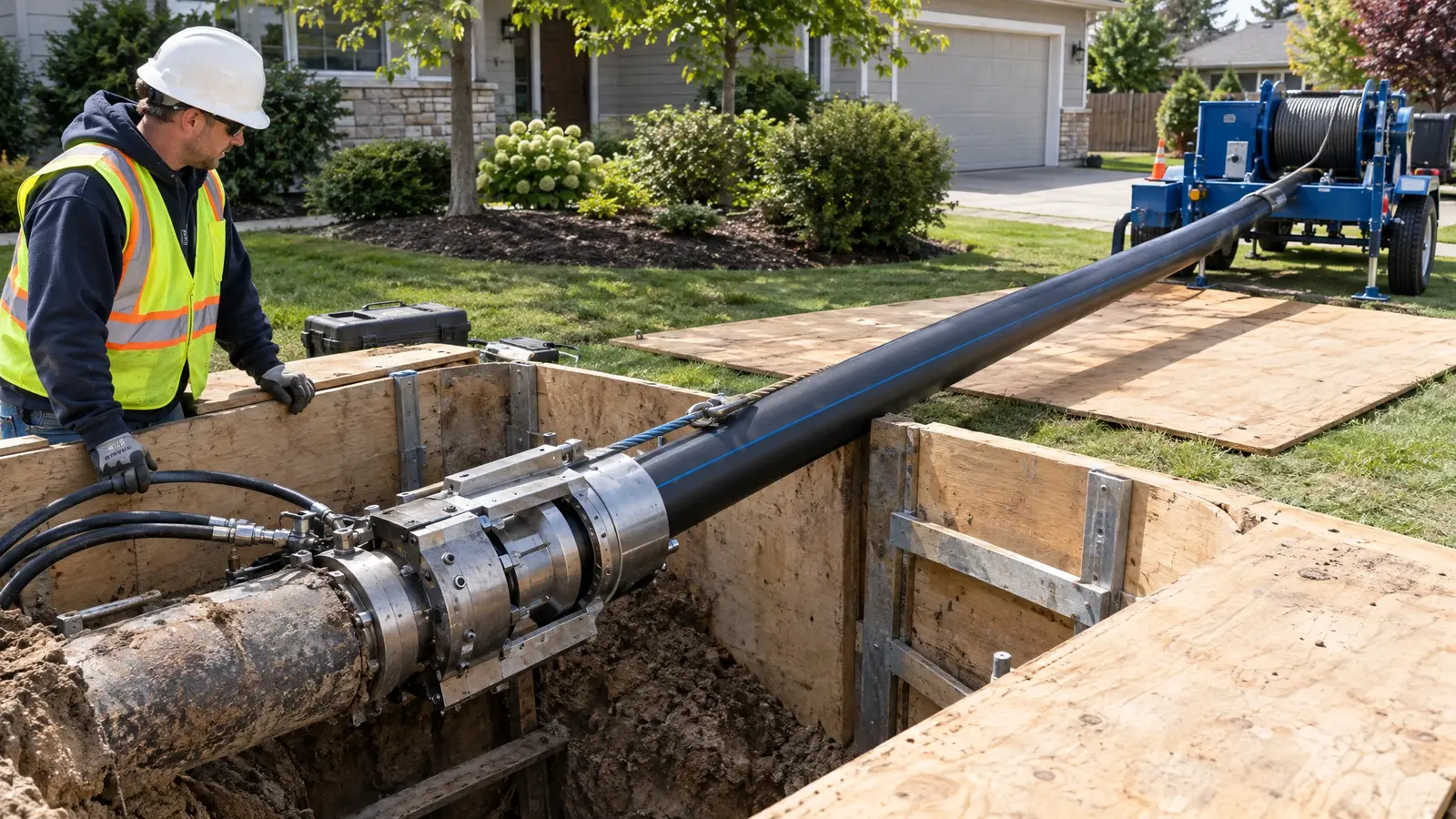
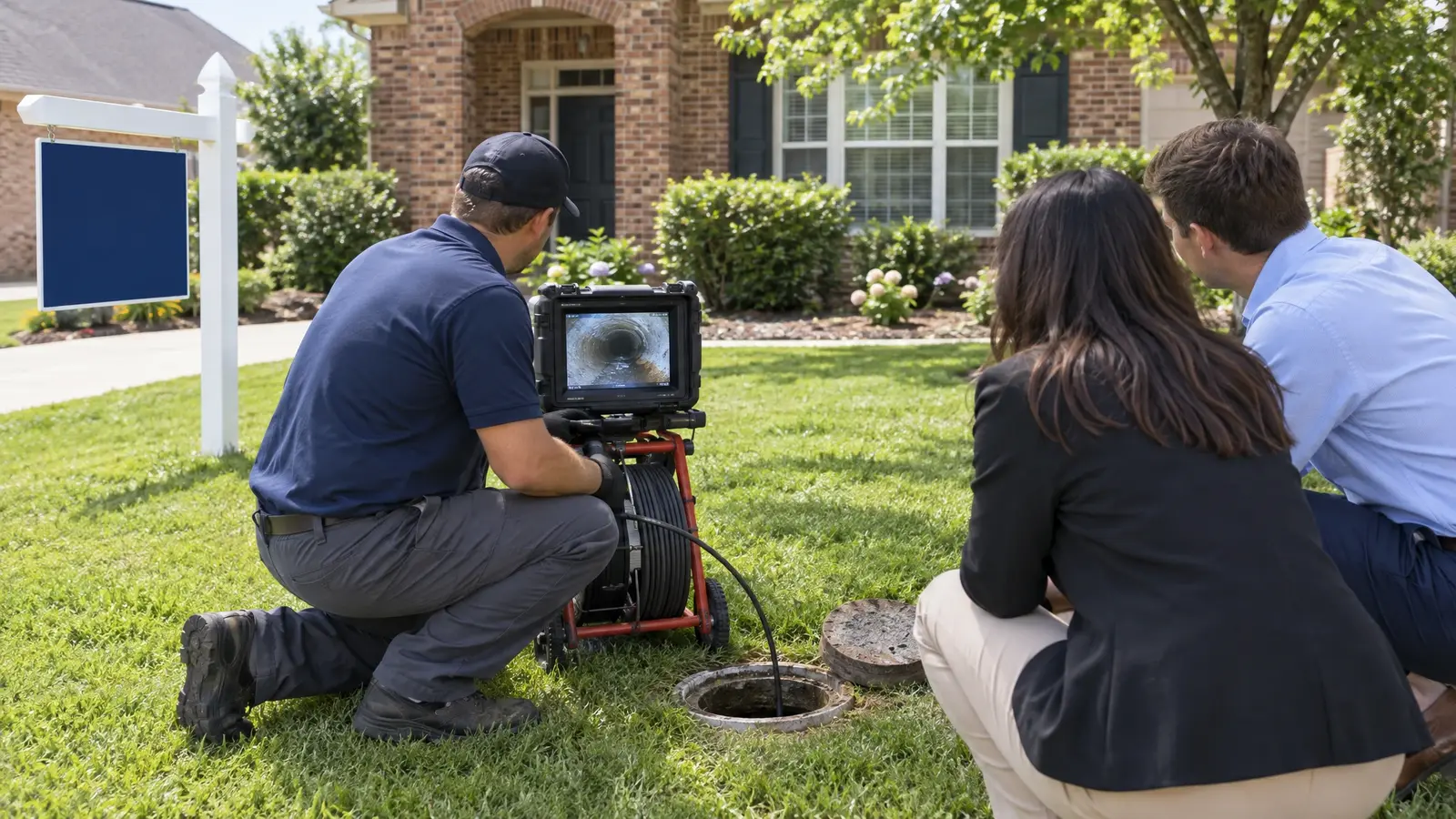
A camera inspection shows an oval or flaking pipe with a rough, laminated texture. Most Orangeburg is beyond saving, and the best fixes are pipe bursting or full replacement with PVC or HDPE. Because it often fails without warning, early discovery is valuable.
Layers of wood pulp and tar.
Soft walls squeeze out of round.
Flaking, laminated surface.
Collapsed or oval pipe needs replacement.
Common in 1940s to 1970s construction.
Replace before it fails.
Use the clog locator, ask the repair advisor or ballpark the cost.
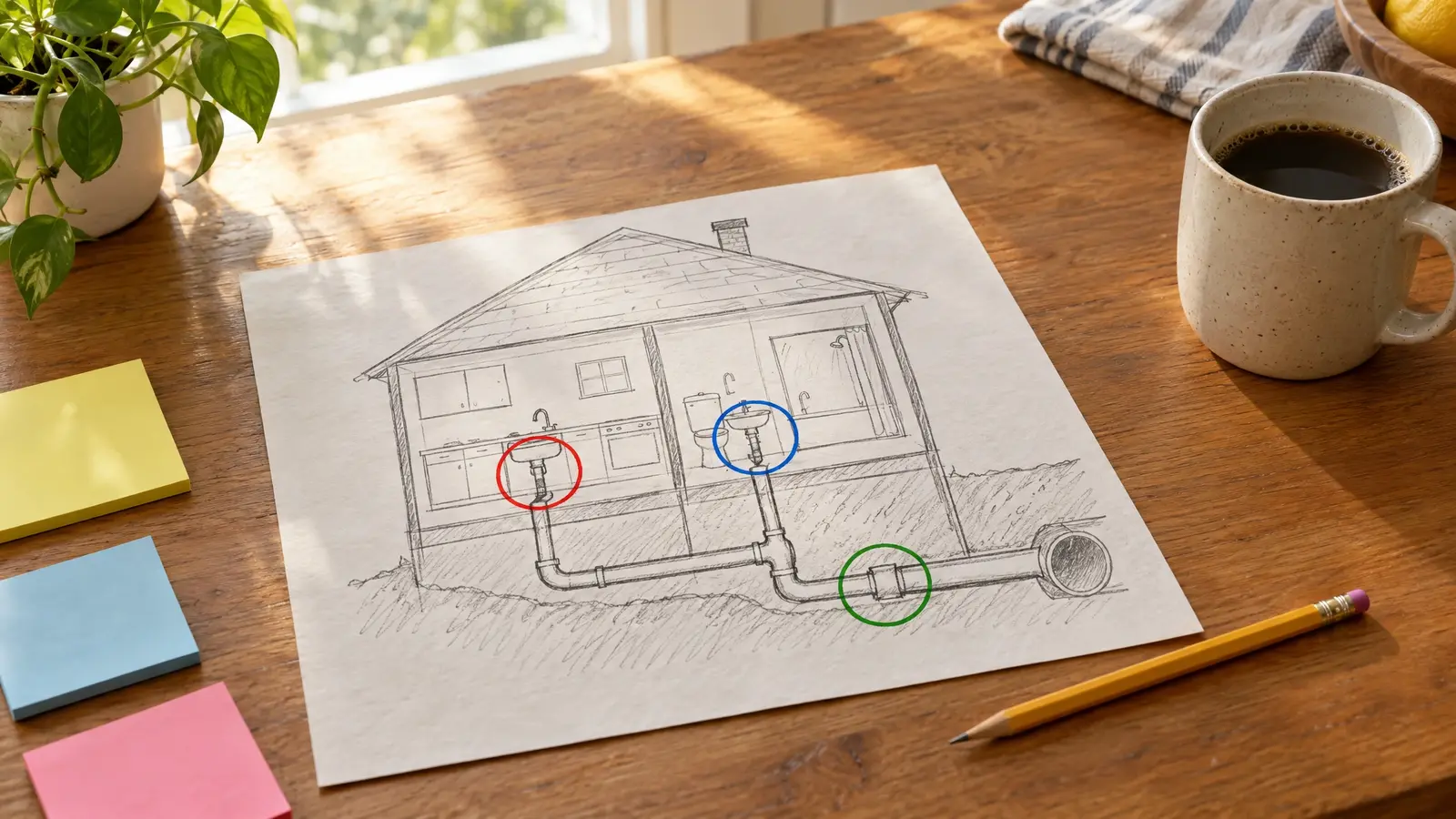 Clog LocatorTell us which fixtures are slow, gurgling or backing up and watch a cutaway of your home light up where the blockage probably is.Try it
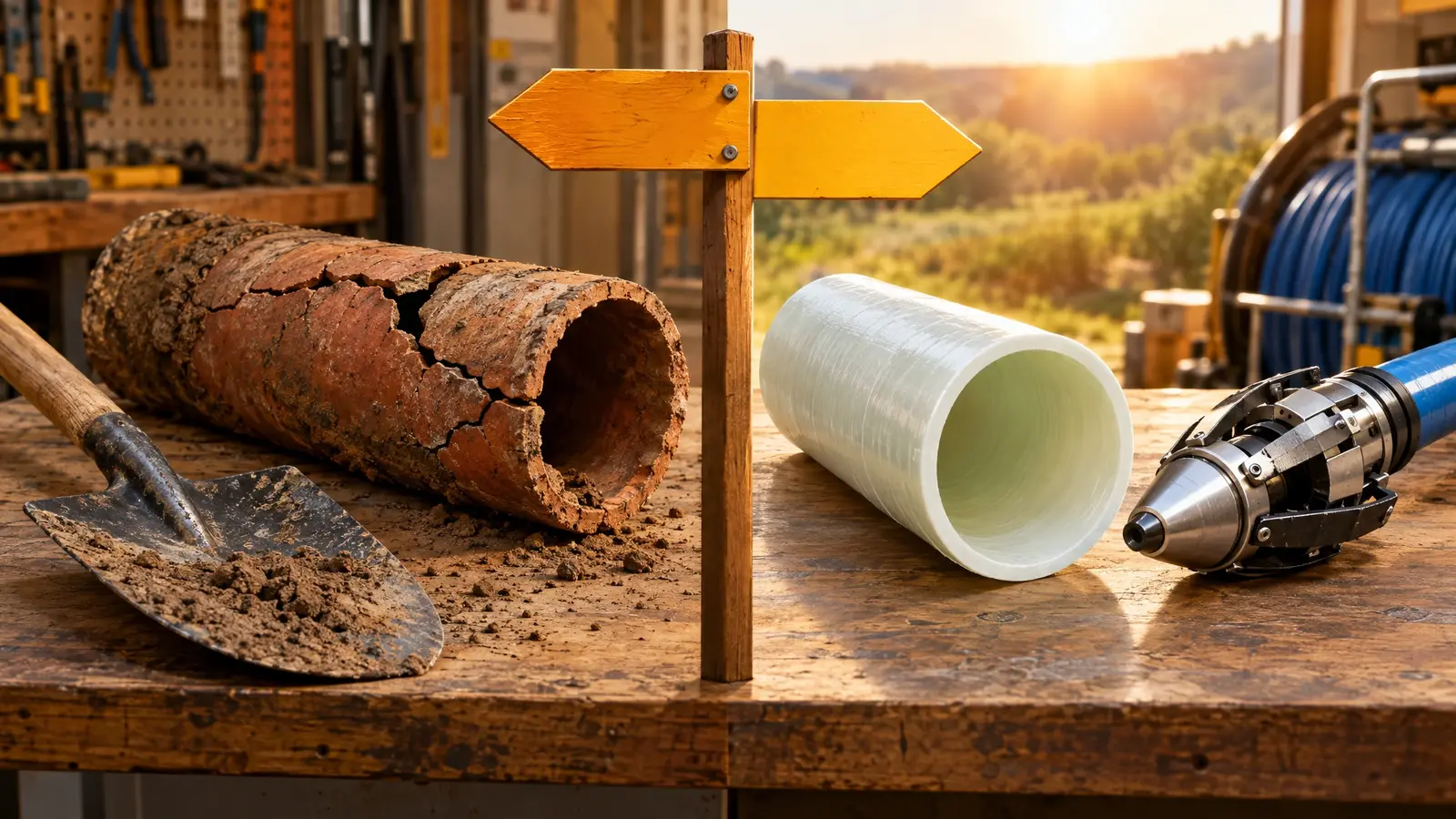 Repair or Replace AdvisorSix questions about your pipe and what the camera found, and we rank cleaning, spot repair, lining, bursting and replacement for you.Try it
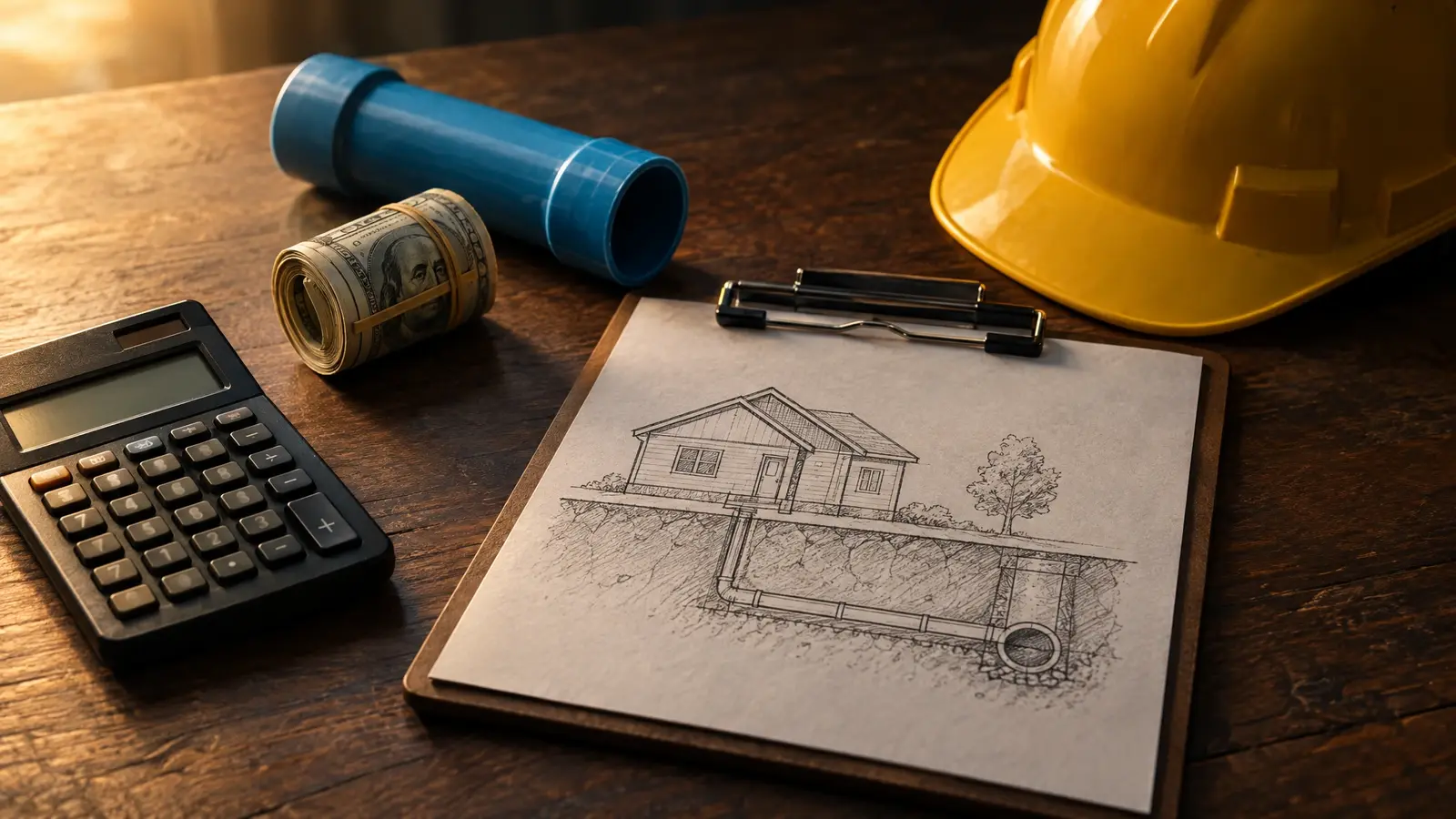 Drain and Sewer Cost EstimatorPick a job, a length and a few options and get a ballpark planning range with a monthly payment view.Try it
A camera inspection reveals the oval shape and flaking texture, and a home built in the 1950s or 1960s is a clue.
High-pressure jetting can destroy it. We inspect first and clean gently or replace.
Pipe bursting often makes replacement more affordable than a full trench.
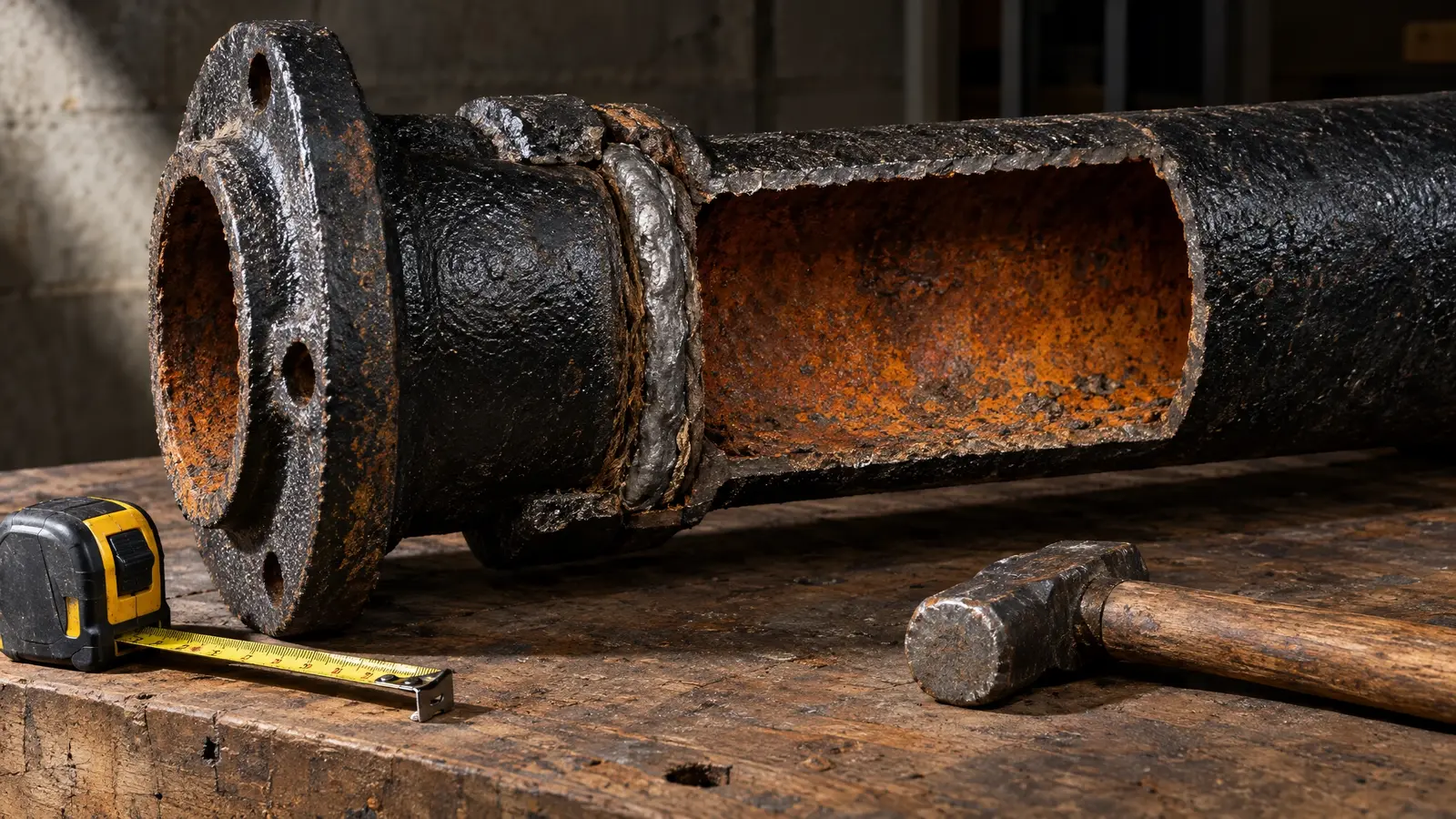 Pipe or methodCast IronTough and quiet, but it rusts from the inside after many decades. Common in homes built before the…Learn more
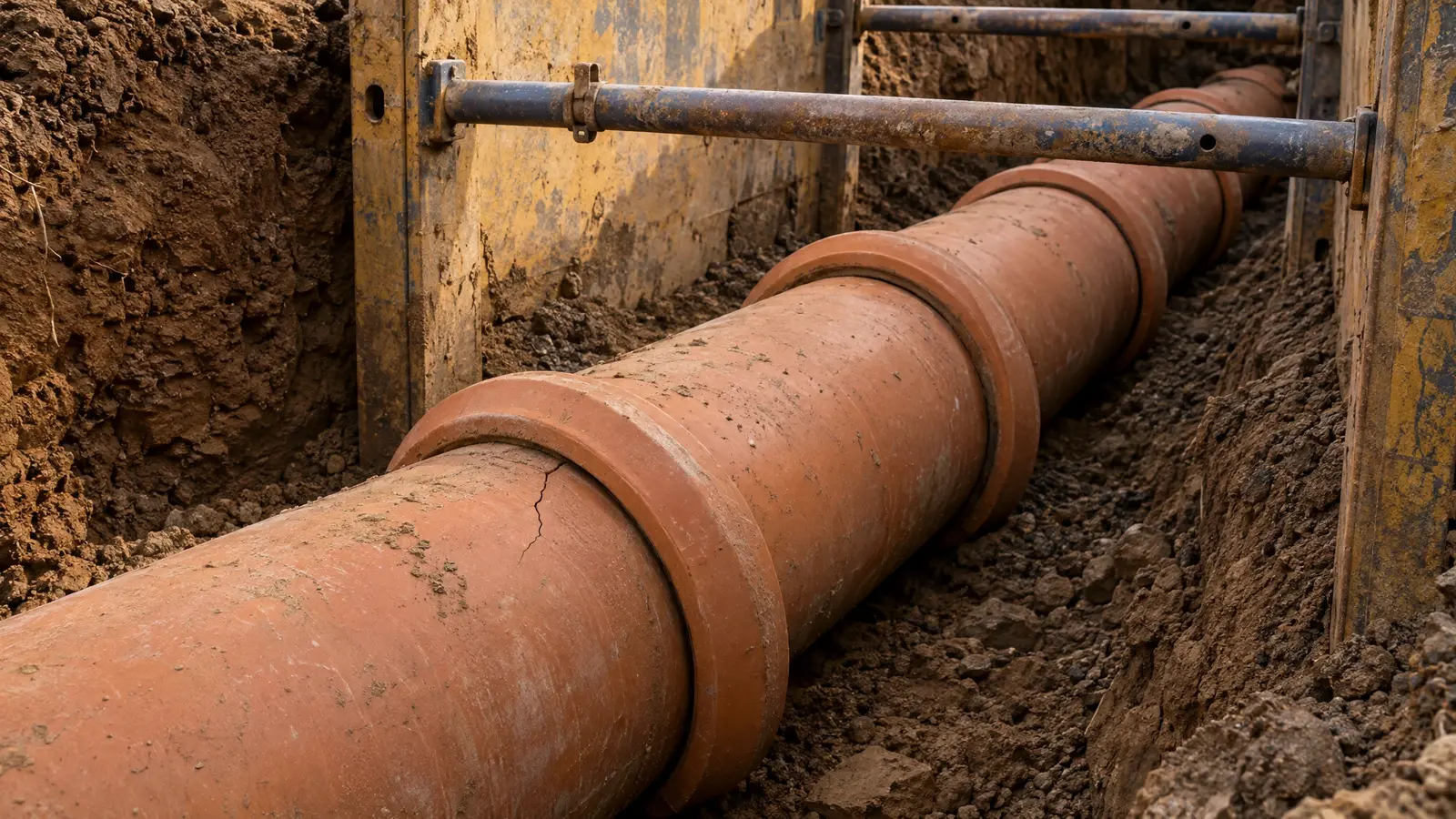 Pipe or methodClay TileRock-hard and long-lived, but the short sections and joints let roots in. Common in older sewer laterals.Learn more
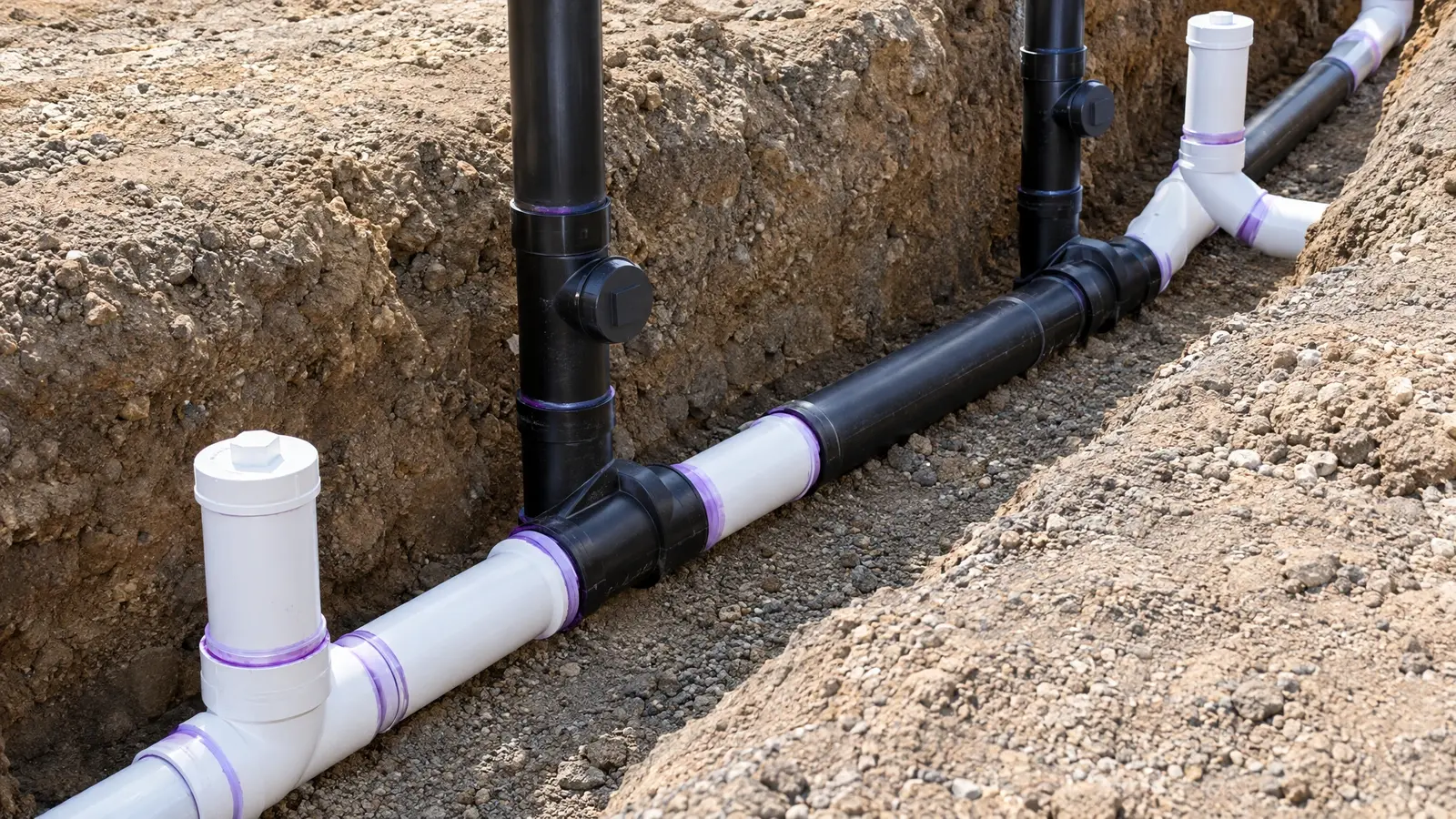 Pipe or methodPVC & ABSSmooth, light and corrosion-proof: the standard for new drain and sewer lines for decades.Learn more
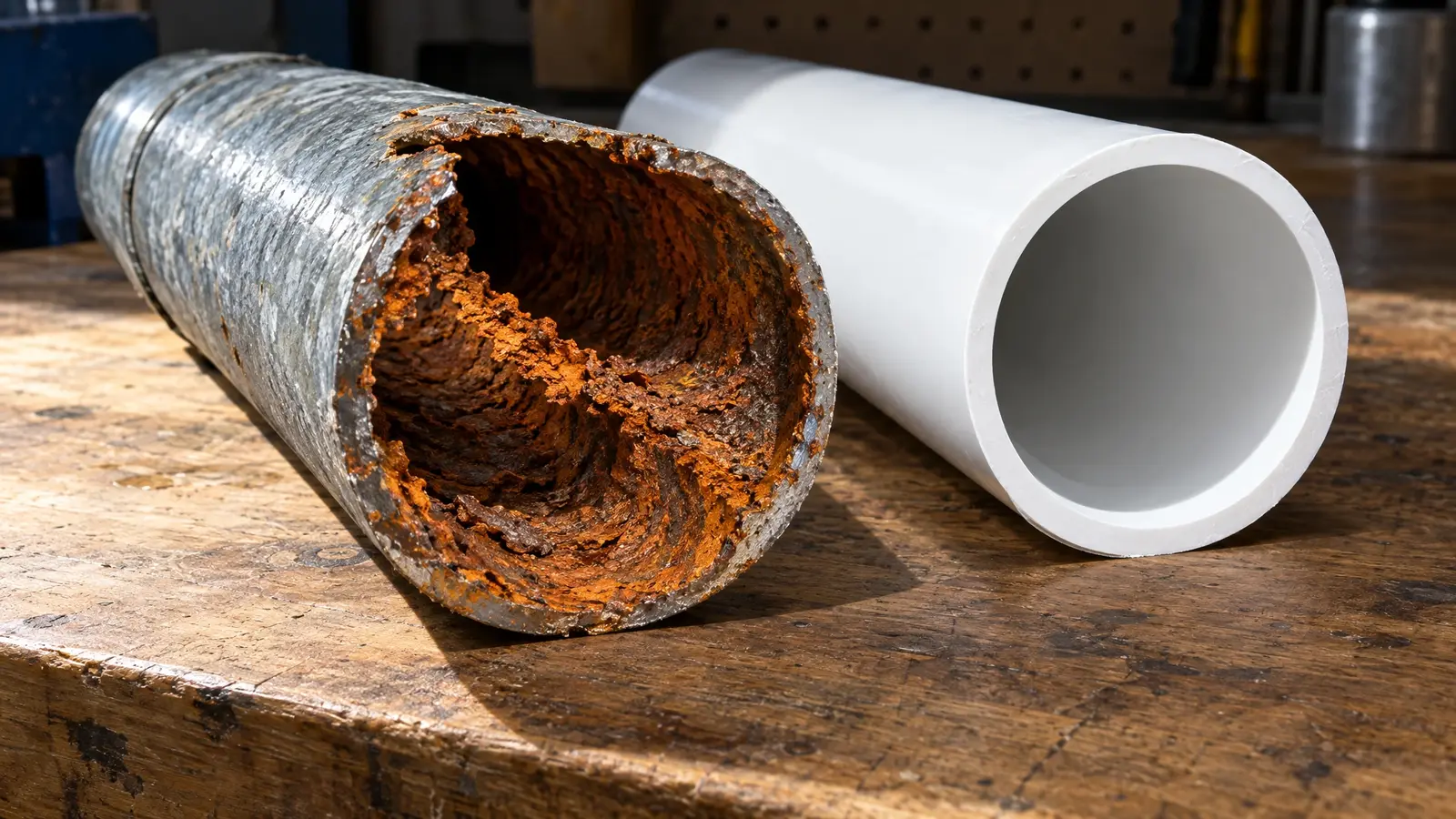 Pipe or methodGalvanized SteelZinc-coated steel that was common in older homes. It corrodes and clogs, and replacement is usually the answer.Learn more
Fast response, a camera to show you the cause and a clear price before we start.