What the camera does
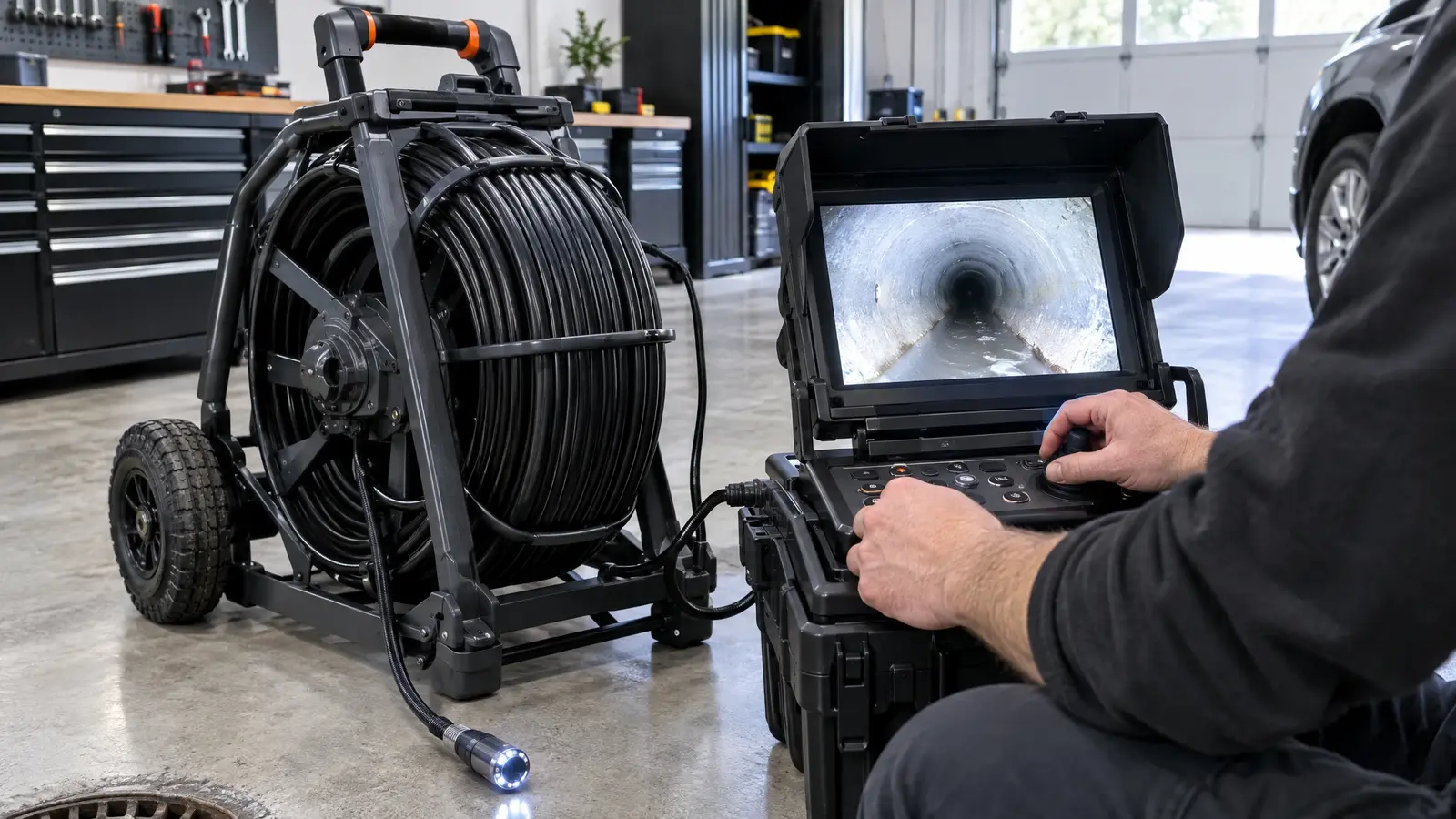
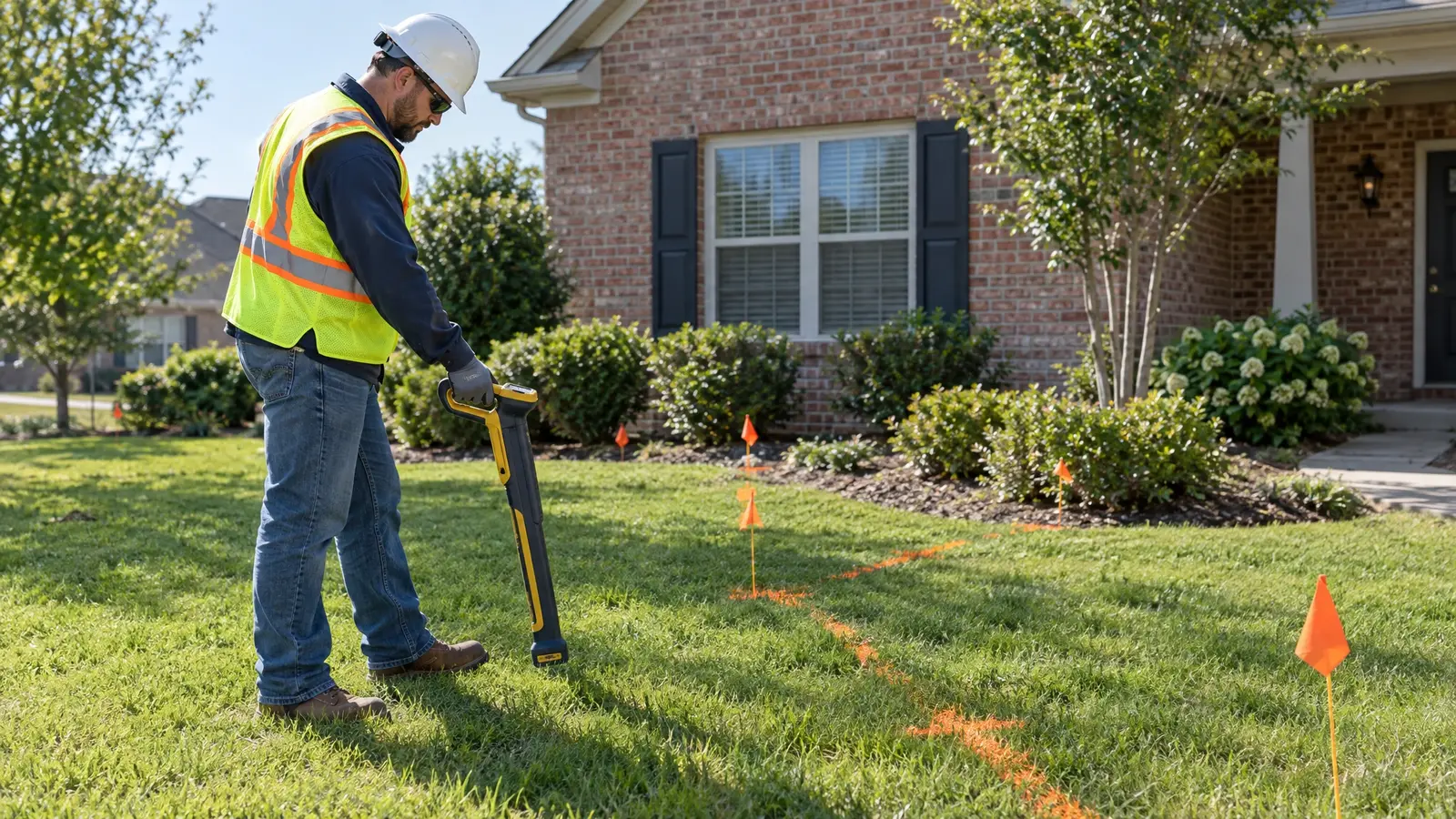
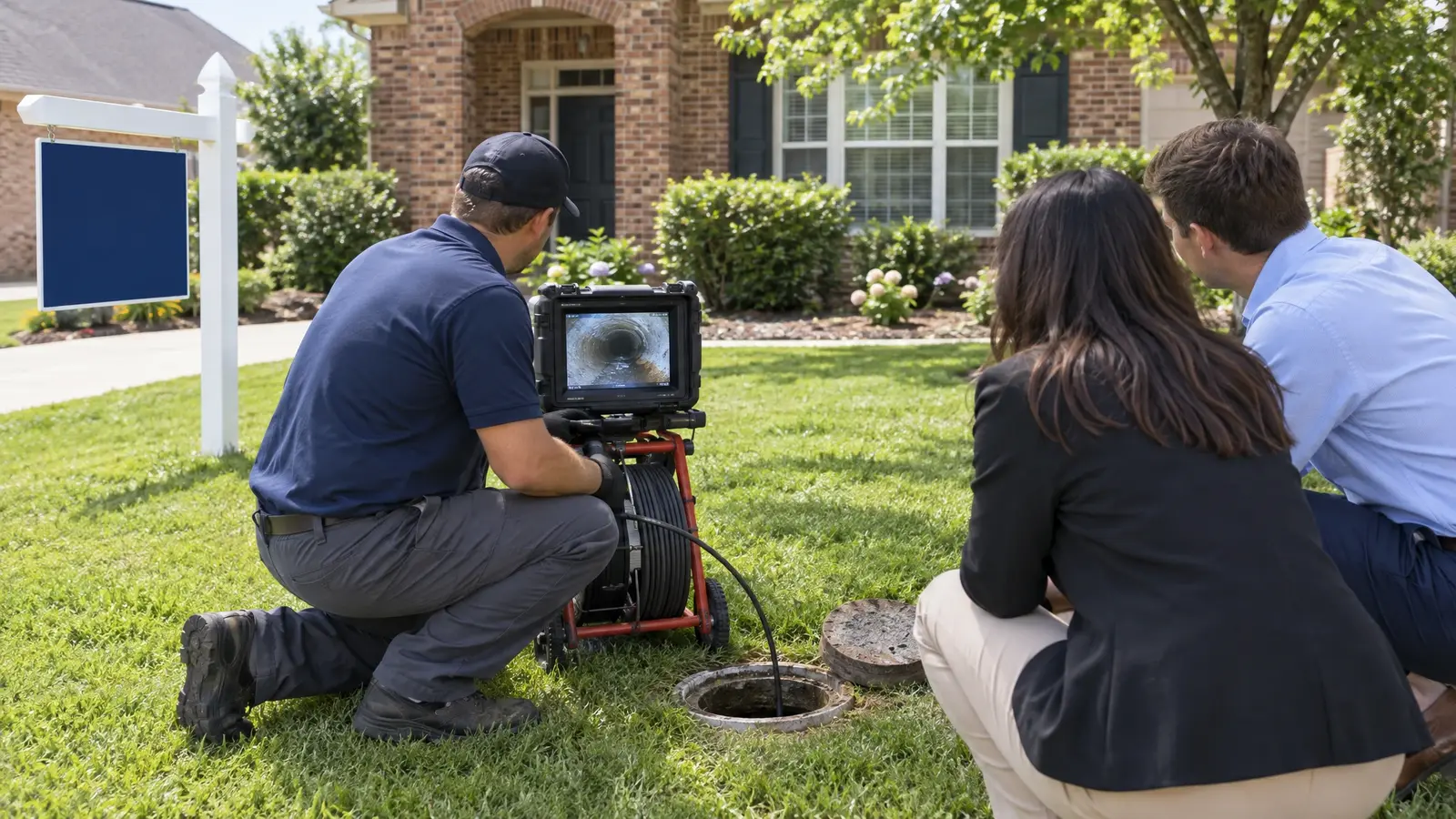
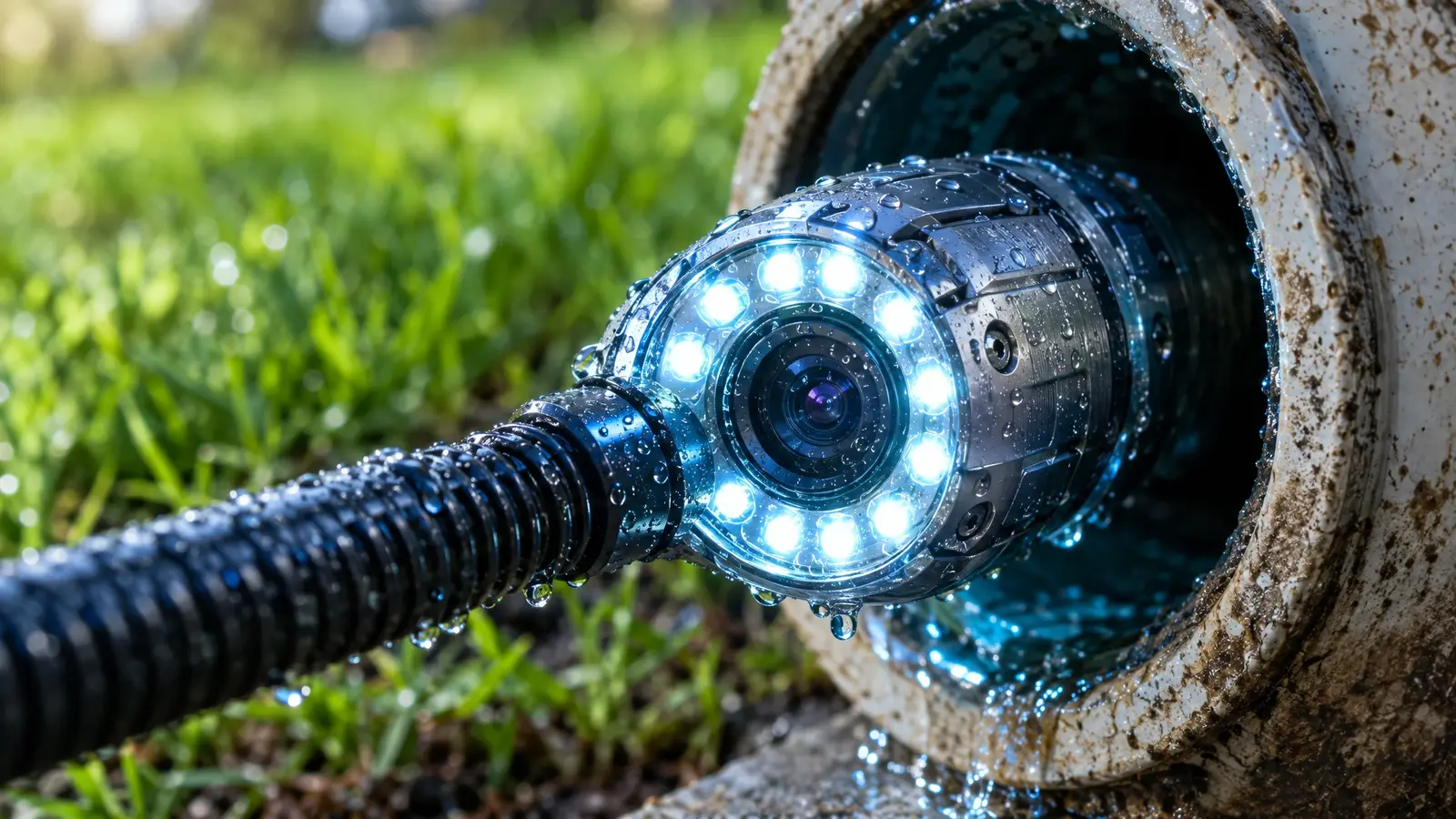
A sewer camera is a waterproof lens with lights on a flexible push cable. It shows live video on a monitor and records it. Many have a transmitter that lets us find the camera from above.
It sees what a cable cannot: the condition of the pipe wall.
Roots and grease
Roots look like pale, hairy threads or thick brown mats at joints. Grease shows as a yellow-white coating that narrows the pipe. Both can be cleaned, and roots can be repaired at the entry point.
Cracks, offsets and breaks
A crack shows as a dark line across or along the pipe. An offset joint looks like a step. A break looks like missing pipe and soil beyond. These are repair findings.
Bellies and standing water
A belly shows as a pool of water in an otherwise dry pipe. A small belly may be managed with cleaning, and a deep one calls for repair.
Material and condition
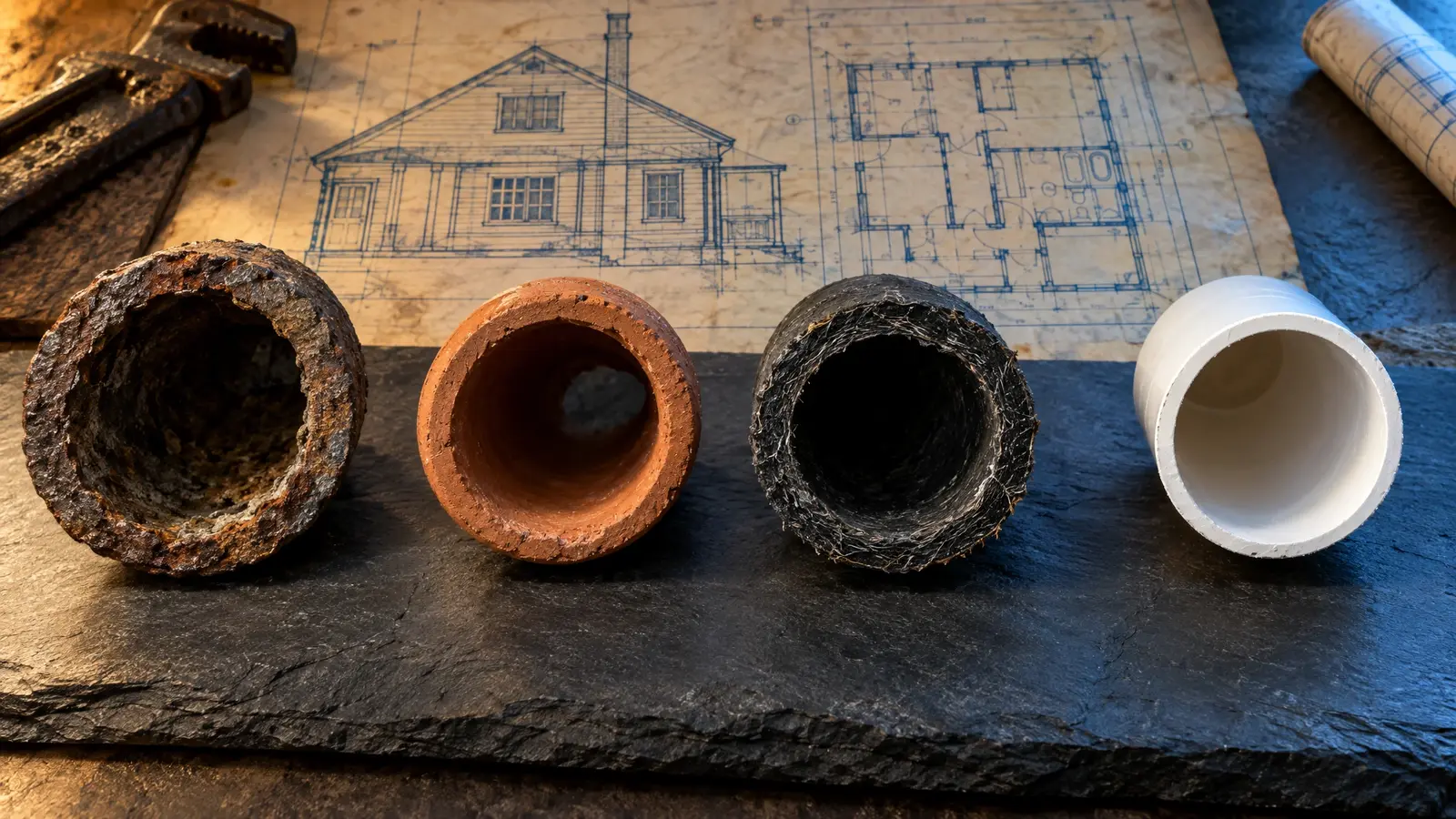
You can often identify clay by its joints, cast iron by its rough scale, Orangeburg by its laminated oval shape and PVC by its smooth wall. Material helps predict remaining life.
What to ask for
Ask for the video, the footage depth of each defect, a locator mark on the ground and a written summary. That is what lets you compare quotes with confidence.
Ask for the video and the depth of every defect before you approve a repair.